
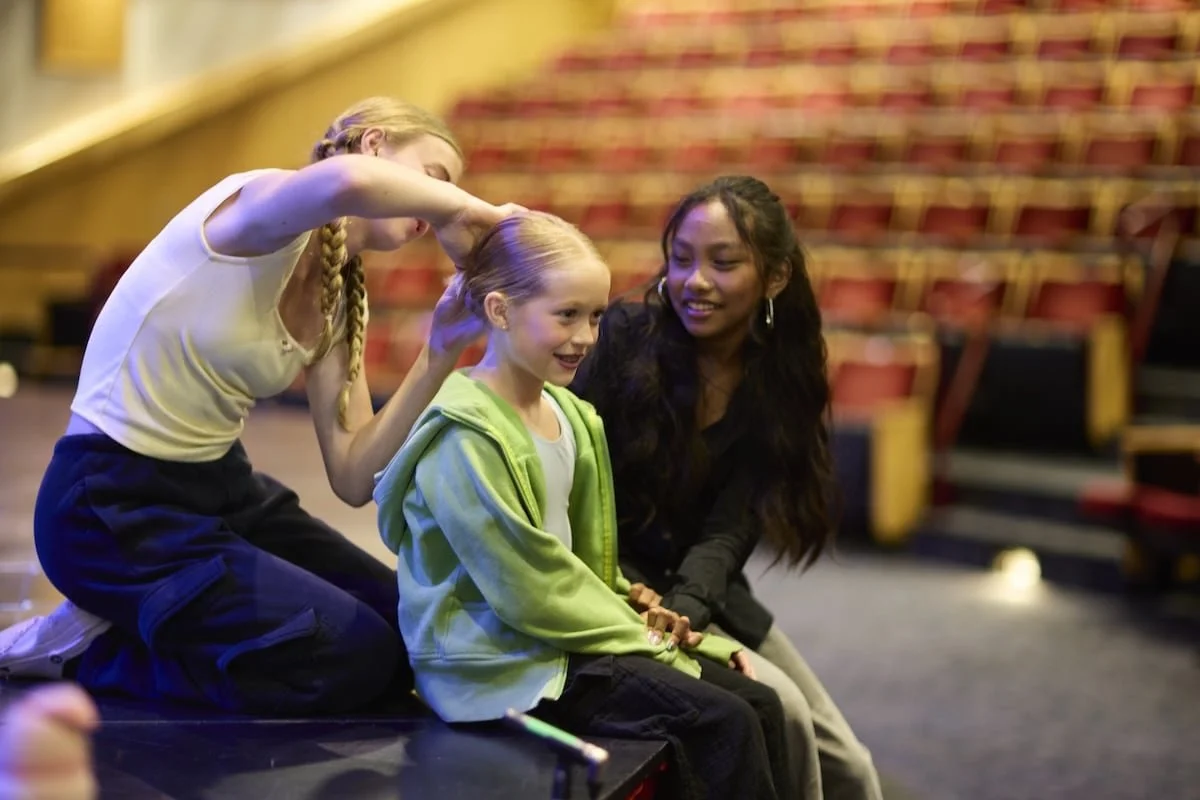
The lights are coming up. Somewhere just beyond the curtain, an audience member is settling into their seats. A young performer waits for a familiar cue, remembering the line they have practiced so many times. They may be excited to share the show and still wish the moment felt a little less frightening.
Those feelings can sit side by side. For a child who is new to musical theatre, even walking into rehearsal can take courage. There are unfamiliar faces, songs to learn and a stage that may seem much bigger than expected. The benefits of theater camp can reach beyond the final bow, as young performers practice skills they can carry into everyday life.
At Sea Star, theatre camp gives young performers a chance to become familiar with that world through games, warm-ups, rehearsals and the encouragement of a cast working together. Stage fright may not disappear, but each rehearsal offers another opportunity to try.
When stepping onstage feels like a big leap
Stage fright can show up in quiet ways. A child may know their lines at home but hesitate to say them in front of others. Another may enjoy singing with a group and feel unsure when it is their turn to stand alone. Even an eager performer can feel a rush of nerves just before stepping onstage.
We have so many stories from different camps and different productions where a Sea Star student was afraid to perform in front of an audience, but with encouragement from the teaching team and her fellow cast these anxious students took the stage and completed their performance. Time and time again we have seen these same students return for more productions with so much more confidence. Sea Star offers students an invitation to try, offered with patience and support, and a whole lot of fun.
When a child says they are nervous, it helps to take them seriously. A parent or teacher might ask which moment feels hardest: the audition, a line, an entrance or the thought of being watched. Listening first makes it easier to offer help that fits the child, instead of asking them to be brave all at once.
Why stage fright feels different for every child
There is no single reason for stage fright. Some young performers worry about forgetting a cue; others are uncertain about casting, making mistakes or fitting into a new group. An unfamiliar theatre can feel overwhelming, while a child who has performed before may still feel nervous about a new role.
The first step may be simply watching a game, listening to the group or joining a warm-up when they feel ready. As the room becomes more familiar, a child may begin offering an idea, speaking a little louder or trying a scene with a partner.
These changes are often small enough that no one in the audience will ever see them. To the child making them, they can matter a great deal. A welcoming camp leaves room for both the enthusiastic performer and the one who needs a little more time.
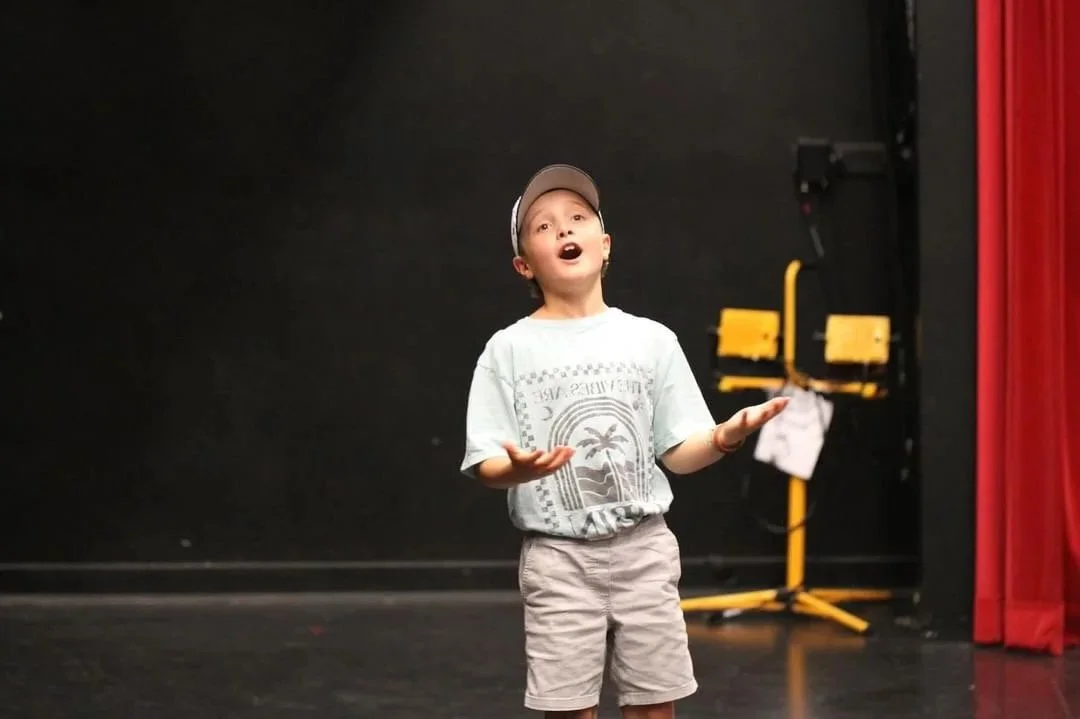
How rehearsal helps young performers feel ready
A production begins with pieces. There are words to remember, music to learn, movements to practise and cues to listen for. During Sea Star camps, group games, vocal and dance warm-ups and rehearsals help children turn those separate parts into a show.
Imagine the first rehearsal of a scene. A performer may miss an entrance or forget what comes next. The group pauses, tries the moment again and gradually finds its rhythm. By the time costumes and lights are added, the same entrance may have been practiced many times. Familiarity can make a daunting moment feel more manageable.
Preparation can continue at home in small, practical ways. We suggest practicing lines, singing through a section of music or walking through a transition with someone they trust. The aim is to help them feel prepared without turning every practice into a test.
We find encouragement is most useful when it is specific, such as noticing that a child remembered a cue or tried something they found difficult.
Small ways to calm performance nerves
Sometimes nerves return even after plenty of rehearsal. That does not undo the work a young performer has done. A few gentle options may help them choose what to do next:
Pause for a slow breath or a quiet moment to reset.
Ask a teacher to go over the next line, entrance or cue.
Practise one short section with a trusted adult or castmate.
Choose one manageable goal, such as beginning the first line or joining the next group exercise.
Sea Star's camp materials include breathwork as one possible way to respond to anxiety. Some children may find it helpful; others may prefer to talk, move or have a little quiet time. Asking what support they would like gives them a voice in the next step.

How a supportive cast helps children find their courage
There is something reassuring about knowing you are not the only one learning. Around a rehearsal room, other performers are remembering choreography, listening for cues and trying again when a scene does not quite work. The work is shared.
At Sea Star, returning campers can help newcomers find their feet by welcoming them into games, answering questions and cheering them on. A child who feels unsure may see another performer make a mistake, laugh gently about it and continue. That kind of moment can make trying feel safer.
Dress rehearsals are especially useful because they bring so many pieces together. A missed cue or a difficult transition can be frustrating, but it also gives the cast a chance to solve a problem before the audience arrives. Learning to listen, recover and keep going is part of live theatre.
A lead role and an ensemble part ask for different things, yet each performer contributes to the production. Children can take pride in helping a scene work, supporting a castmate or being ready for their moment. Encouragement from a teacher matters, and so does hearing it from someone standing beside you.
Getting comfortable with the theatre and stage
The stage itself is part of the experience. At Sea Star, camp productions take place on the professional stage of the Charlie White Theatre, with costumes, staging, sound and lights helping the show come to life. That setting can be thrilling, especially for someone seeing it from a performer's point of view for the first time.
It can also feel intimidating. Rehearsal gives children time to learn where to enter, where to wait, how to find their place and whom to ask for help. Each familiar detail makes the theatre less of an unknown.
Sea Star's teaching team works with young performers in this professional space. In our About video, Charlotte describes how the beauty of the Charlie White theatre seems to inspire children to focus and work hard. A room that once felt enormous may gradually become a place where a child knows what to do next.
Choosing a theatre program that feels right for your child
For families considering theatre camp, the most useful question may be whether the program feels right for their child. How are beginners welcomed? What happens when someone forgets a line? Is there time to rehearse before the performance? How do teachers respond to nerves around auditions or casting?
Sea Star welcomes newcomers and returning performers to its camps. Over two weeks, campers work with professional teaching artists toward a musical production. The Academy and other classes offer different rhythms, with more time devoted to training and technique. Private lessons may appeal to a child who wants individual attention.
A child interested in acting may be eager for a full production, or they may want to explore games, scene work, singing or movement first. Looking at the structure, age range and expectations of each program can help families choose a starting point without putting pressure on the outcome.
Questions parents ask about stage fright at theatre camp
Can theatre camp help a child who has stage fright
Camp offers chances to rehearse, participate in a group and receive encouragement from teachers and peers. Some children grow more comfortable with performance as they practise. Every child's response will be different, so consider the environment and support they need.
What might a day at camp look like
A day may include focus games, vocal and dance warm-ups, acting exercises and rehearsals. Campers work on lines, songs, choreography and the details of a shared production.
Does my child need any experience
Beginners are welcome. Sea Star's camps bring newcomers together with young performers who have taken part before. Families can check the age range and expectations for each camp.
Would a class or camp be a better first step
Camp moves toward a production over a short, focused period. Ongoing classes and Academy training give students a different pace for developing technique. The better fit depends on the child's interests, readiness and schedule.
When performance day comes, a young performer may still feel their heart beat a little faster as the lights come up. They also have rehearsals behind them, a cast beside them and people ready to help. Whatever that first moment feels like, choosing to take part is something worth recognising.